

It’s an exciting time for the manufacturing industry. Innovations in auto-identification, big data, artificial intelligence, and robotics are taking on increasing pressures from global competition, supply chain uncertainty, and rising compliance demands to transform operations. The digitisation of manufacturing is bringing together mechanical and digital forces to enable automated, intelligent operations that meet the needs of the future.
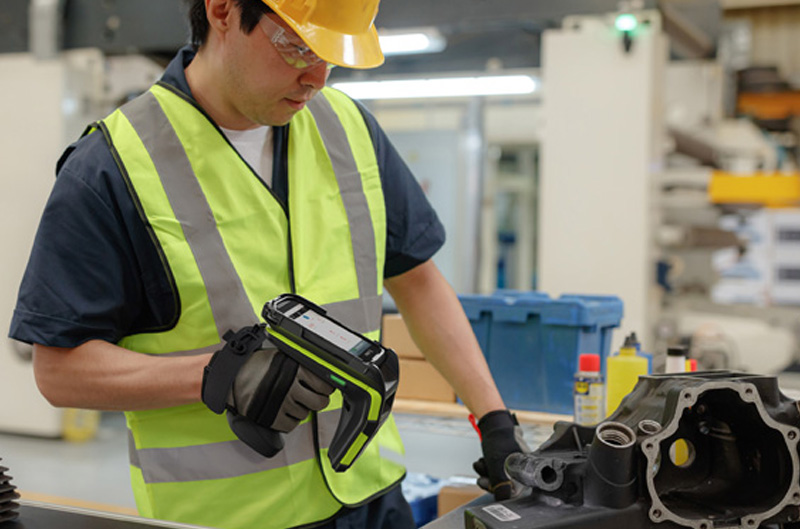
In this blog, we will look at how manufacturers can embrace the latest smart factory technologies to drive efficiency and productivity across their operations and what this can entail for your organisation.
A shift from cost centre to profit enablement
Manufacturing has progressed beyond the strict zero-defect Kaizen principles, yet many people in operations still perceive the goal of achieving zero defects and high-quality production as a cost. Traditionally, manufacturing relied heavily on labour, which meant that quality control required more personnel on the production line. However, advancements in production technology—including Auto-ID barcoding, RFID data capture, and vision cameras that can instantly detect defects—have made it possible to attain zero defects with a modest investment in barcoding technology.
The integration of sensors, real-time data collection, and analytics into the production process enables management to respond immediately to changes in production, supply chain disruptions, quality issues, and production failures. This responsiveness improves quality, reduces production costs, and ultimately enhances customer satisfaction.
Workflow optimisation
One area that is often overlooked in efforts to achieve efficiency in manufacturing is workflow optimisation. In 2026, there is a significant opportunity to implement smart barcoding technology to enhance the movement of materials and inventory handling. This can be accomplished by using vehicle-mounted terminals (VMTs) on forklifts, along with mobile computers and printers, to improve productivity and communication between the production line and logistics management. These advancements will facilitate better access to materials and inventory, ultimately leading to greater efficiency in the movement of internal resources.
The term “fluid factory” was adopted by the industry in 2026 to emphasise the importance of maintaining flexibility in internal workflows. Recent disruptions in the supply chain and the growing demand to introduce new products quickly have highlighted the need for adaptable production processes. Technologies like barcoding, including Zebra RFID and real-time location management sensors, facilitate real-time tracking and significantly enhance flexibility when necessary. These technologies have been widely implemented to improve workflow efficiency.
Connectivity across operations
Data drives decisions, and connectivity facilitates real-time communication. The modern factory relies on data collection from various technologies, including barcode scanners, RFID readers, machine vision cameras, asset sensors, and monitoring systems. These tools provide operations managers with vital information to make decisions that improve operational efficiency.
In 2026, the modern factory aims to connect disparate systems, whether through cloud-based servers or on-site data repositories. APIs and cloud-based systems play a significant role in breaking down barriers between systems, enabling communication among robotics, data capture technologies, and warehouse management systems. This integration is particularly crucial when operations are spread across multiple locations.
We can expect greater data integration in 2026, as exemplified by software development companies like Seagull Bartender. They have transitioned their label design and management software to the cloud and expanded their offerings to include stock control management, creating an interconnected solution with API integration that is suitable for both small and large multi-site operations.
We will see enhanced data integration, as demonstrated with Bartender, along with a greater emphasis on mobile working and communication across operations to improve flexibility and collaboration while on the move.

Takeaway for the Smart Factory for 2026
The Factory of the future has to be flexible and nimble to adapt to the external pressures from global supply chain disruption and be responsive enough to meet the productivity challenges. Some of the main points to take away for your smart factory in 2026 include:
- Manufacturing adds value to the bottom line. No longer just a cost centre a smart connected factory provides a competitive advantage for your organisation.
- Barcoding & Auto-ID technology, including RFID, provides greater accuracy, reducing errors and improving quality control across your operations.
- Smart barcoding technology can deliver a flexible factory with material movement and inventory handling.
- Connectivity throughout and across operations reduces data silos and improves operational performance across organisations.
If you’re ready to embrace the flexible data-driven factory of tomorrow, then feel free to speak to our experienced team at GSM Barcoding for the latest technology to help you achieve your smart operational objectives.