
 Login
Login Basket


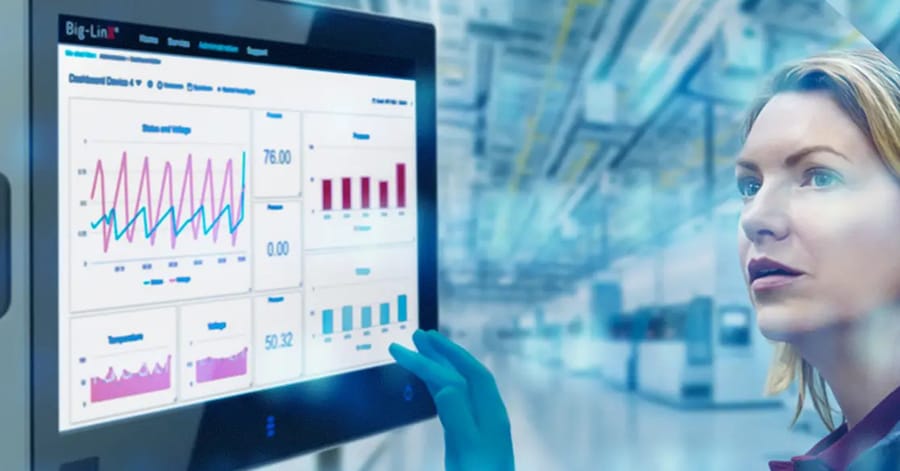

Maintaining hygiene is essential for operations managers in production facilities, especially in the food and pharmaceutical industries. To comply with industry regulations and prevent quality issues and product contamination, strict hygiene standards must be maintained. These standards apply not only to the production line but also to the industrial IT systems and employee workstations used throughout the production process. IT devices, which are crucial for process visualisation and quality monitoring, should be designed to be sterile and easy to clean and built to withstand rigorous sanitation procedures.
In this blog, we are going to look at the specification criteria for industrial IT and issues to be considered by IT and operations managers in strict hygiene quality control environments.
Hygiene Regulatory and Design Considerations
Many regulations and standards must be considered for hygiene-critical industries, such as pharmaceuticals and food production.
Regulation (EC) No 1935/2004 – Regulations governing materials and articles intended to come into contact with food (FCMs) ensure that items like packaging, containers, and machinery do not transfer harmful components to food. These regulations are designed to protect health, maintain the composition of food, and preserve its taste and smell. They specify that materials and articles in contact with food must be inert, meaning they should not release any substances that could compromise food safety or quality.
Regulation (EC) No. 852/2004 – This applies to all food businesses within the EU and requires that equipment in contact with food is constructed and maintained to minimise the risk of contamination and is easy to clean and disinfect at critical control points.
Standards such as DIN EN 1672-2 and the EHEDG guidelines provide essential criteria for hygienic design, including material selection and functional requirements. These frameworks are crucial for ensuring hygienic practices in food processing. The DIN EN 1672-2 standard establishes European safety requirements for machinery, focusing on materials and cleanability. Meanwhile, the EHEDG guidelines offer detailed, practical engineering instructions to help meet these standards and ensure safe food production.
In the pharmaceutical industry, key risks include exposure to potent compounds, solvent fumes, and hazardous dust from milling or blending. Cross-contamination threatens worker health and medication effectiveness. To mitigate these issues, manufacturing facilities must comply with regulations such as OSHA and ISO.
To comply with these standards, computers and HMI operating units used on the machine floor must withstand harsh cleaning procedures, including high-pressure washdowns, and be designed to prevent the build-up of contaminants.
Design for IP Ratings and Hygienic Standards
As manufacturing becomes more digitalised, there is a need for terminals in food and pharma processing environments to meet stringent hygiene standards, with stainless steel and sealed units a key specification factor to prevent bacterial growth and cross-contamination.
One of the most important features for a computer in these environments is its protection class. Devices must be dust-tight and waterproof. IP66 is standard, while IP67 (submersible) and IP69K (high-pressure, high-temperature washdowns) are required in high-hygiene zones.
Proper material selection is critical to design. Stainless steel is a favoured material as it’s resistant to water, steam, humidity, and food acids. Equipment should feature seamless, corrosion-resistant stainless steel, free of dead spaces, crevices, or sharp edges where bacteria can thrive.
Hygienic Design Features
The overall design of the web panel or HMI (Human-Machine Interface) is essential for maintaining hygiene. A seamless, single-piece housing with minimal joints and crevices is crucial to prevent dirt and residue from accumulating. For instance, the SHP9000 series stainless steel web panels from ADSTEC feature a fully enclosed steel housing that complies with EHEDG guidelines. This seamless and hygienic design facilitates easy, quick, and residue-free cleaning, which is perfectly matched to meet the high standards required in mechanical and factory engineering within the food and pharmaceutical industries.
Advancing Production with the Smart Factory
In the age of the connected factory & Industry 4.0, hygienic production terminals enable real-time process visualisation and paperless manufacturing. Features to look for in specifying your industry technology include:
- Hygienic Design
- Future-proof hardware
- Easy & flexible assembly
- Easy integration
This shift to intelligent, hygienic systems, like the combination of the ADSTEC turnkey industrial solutions, helps improve communication, increase productivity, and ensure the highest standards of safety in food and pharmaceutical production.
Bespoke IT for your production environment
If you operate in the food or pharmaceutical sector, your computers must be IP69 K-rated and feature a hygienic design to withstand rigorous cleaning and prevent contamination. Transition to intelligent, hygienic systems like the SHP9000 series will help improve visibility, boost productivity, and ensure hygiene compliance. ADSTEC can help develop total turnkey solutions from web panels and terminals to vehicle-mounted terminals and the secure backbone network for your production facilities. With complete build and design control of its IT solutions, you can customise the technology to your needs, so no need to compromise. Contact us today to explore the right hygienic IT solution for your operations.
Share this:

