
 Login
Login Basket



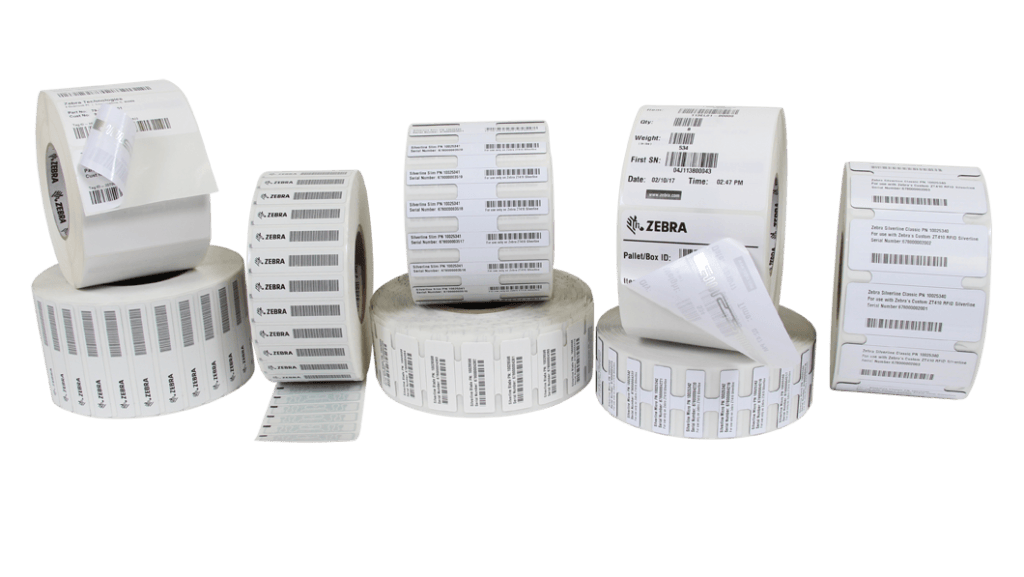
In today’s rapidly evolving industrial landscape, labelling is no longer just about identification… It’s about intelligence.
As Industry 4.0 continues to reshape manufacturing, logistics, and asset management, businesses are increasingly turning to smart labelling solutions to stay competitive.
At the forefront of this transformation? Technologies such as RFID (Radio Frequency Identification) and NFC (Near Field Communication) are transforming how businesses track, monitor, and manage their assets.
Because these innovations are enabling custom industrial labels to do far more than display static information, they are becoming powerful tools that are changing the way industries operate.
At GSM Barcoding, we recognise this shift and are continually evolving our capabilities to deliver advanced industrial labelling solutions that meet the demands of modern industry.
Understanding RFID and NFC Technologies
RFID and NFC are often discussed together, but they serve distinct purposes within the smart labelling ecosystem.
But how do they work?
RFID (Radio Frequency Identification)
RFID technology uses radio waves to communicate data between a tag and a reader, which doesn’t require an optical line of sight to transmit information.
This intelligent system provides businesses with many advantages, including the ability to track the location of each product throughout the value chain, from when it’s made to when it’s purchased.
The information stored on RFID tags can also be updated or locked, providing organisations with greater flexibility over the information they’re putting out there.
NFC (Near Field Communication)
NFC, on the other hand, operates over a much shorter range (between direct contact and a few centimetres), using a microchip and an NFC antenna.
As a result, NFC technology is commonly used in smartphones, public transport systems, and secure access environments. Combined with encryption measures, the short-range nature of this technology makes it highly secure.
It is also incredibly versatile, allowing many different applications, including data exchange, access control and contactless payments.
Both of these technologies are increasingly being integrated into custom industrial labels, enabling businesses to bridge the gap between physical assets and digital systems.
The Rise of Smart Labelling in Industry 4.0
Industry 4.0, otherwise known as the Fourth Industrial Revolution, is defined by the rise of data and connectivity, human-machine interaction, analytics and improvements in robotics.
Within this environment, traditional labels simply cannot keep up.
And this is where smart labelling comes in.
By embedding RFID and NFC technology into their latest labels and nameplates, businesses can:
- Track assets in real time
- Automate inventory management
- Reduce human error
- Improve operational efficiency and productivity
For manufacturers and asset-intensive industries, this represents a major step forward. Instead of relying on manual processes or barcode scanning, smart labels enable a seamless exchange of data across multiple systems.
At GSM Barcoding, we specialise in producing industrial labelling solutions designed to integrate with modern technologies, helping clients future-proof their operations.
Embedding RFID and NFC into Industrial Nameplates
One of the most exciting developments in this space is the integration of RFID and NFC into durable industrial nameplates.
What are smart nameplates?
Smart nameplates combine the robustness of traditional identification labels with embedded digital functionality. They are designed to withstand harsh environments while providing access to dynamic, real-time information.
This is particularly valuable in sectors such as:
- Military
- Transportation
- Electronics and assembly
- Medical equipment
At GSM Barcoding, we support a diverse range of sectors in creating labelling that reflects their applications, different environmental conditions and sustainability goals. With over 40 years of experience, our experts can advise on the best metals and plastics for your specific use.
Key Applications of Smart Labelling
1. Asset tracking and management
RFID-enabled labels allow businesses to monitor equipment and inventory across facilities without manual intervention. As a result, this technology can significantly improve traceability, ensuring products can be tracked from production through to delivery.
2. Maintenance and service access
NFC tags embedded in nameplates can support maintenance and servicing. Implementing this technology means that regular audits can be easily conducted, as NFC tags can instantly provide facilities teams with service histories, as well as enable synchronisation across devices.
3. Anti-counterfeiting measures
RFID and NFC technology can verify authenticity, helping protect brands and ensure compliance, as each label has a unique digital identifier.
By working with a specialist like GSM Barcoding, businesses can implement custom industrial labels that are tailored to these specific use cases.
Designing Smart Labels for Harsh Environments
While the benefits of RFID and NFC are clear, their successful implementation depends heavily on design and manufacturing expertise.
Industrial environments present unique challenges, including:
- Exposure to extreme temperatures
- Chemicals and solvents
- Abrasion and wear
- Metal surfaces that can interfere with signals
At GSM Barcoding, we understand that performance and durability are just as important as functionality. That’s why our industrial labelling solutions are engineered to maintain reliability even in the toughest conditions.
We work closely with clients to ensure:
- The right materials and manufacturing processes are selected
- Tags are optimised for optimum performance
- Labels are fully customised to the application
Overcoming Challenges in Smart Labelling Adoption
As with any emerging technology, there are considerations to address when implementing RFID and NFC.
Cost vs. ROI
While initial costs may be higher than traditional labels, the long-term efficiency and productivity gains, as well as error reduction, often deliver significant returns on your investment.
Infrastructure requirements
When combining RFID sensors with IoT devices, this technology can become seamlessly integrated with existing software platforms. This infrastructure is particularly important when it comes to industries like pharmaceuticals and food processing.
NFC, while simpler, still requires planning around user interaction.
Data security
Protecting sensitive information is essential, particularly when labels are used for authentication or asset tracking. All technology usage must be compliant with privacy safeguarding laws so as to avoid regulatory non-compliance.
Environmental factors
Comprehensive testing is essential, so that performance can be guaranteed in real-world, often critical, conditions.
This is where partnering with an experienced provider like GSM Graphic Arts makes a difference. Our team helps guide clients through these considerations, ensuring a smooth transition to smart labelling solutions.
The Future of Industrial Labelling
The adoption of RFID and NFC is only set to accelerate.
Smart labels are becoming a key component of connected ecosystems, transforming how businesses interact with their assets and data.
As industries continue to digitise, industrial labelling will play an increasing role in:
- Enabling digital twins
- Supporting predictive maintenance
- Improving sustainability through better resource management
- Enhancing supply chain transparency
Emerging developments are also enabling more discreet integration, with increasingly compact components allowing previously hard-to-tag items to be tracked more effectively.
At GSM Graphic Arts, we are committed to staying at the forefront of these developments, continuously investing in new technologies and processes to deliver cutting-edge customer industrial labels.
Why Choose GSM Barcoding?
With decades of expertise in industrial labelling, GSM Barcoding is uniquely positioned to help businesses embrace the future.
We offer:
- Fully customised labelling solutions
- Expertise in durable materials and harsh environments
- Forward-thinking integration of smart technologies
- A collaborative approach tailored to your needs
Whether you’re exploring RFID, NFC, or other smart labelling innovations, our team is ready to support your journey.
Preparing for the Future
What makes RFID and NFC technologies stand out is that they can provide enhanced security, real-time data tracking, and interactive customer engagement for a diversity of industries.
Businesses using this advanced technology to elevate their supply chain visibility and transparency, align with their sustainability efforts and fulfil the increasing consumer need for personalisation, will stay ahead of the curve.
Because in the age of Industry 4.0, investing in smart labelling is no longer optional; it’s essential.
By partnering with an experienced provider like GSM Graphic Arts, you can unlock the full potential of custom industrial labels and position your operations for the future. Get in touch with a member of our team today to learn more.
Share this:

